Paper · 2024-03-04
RNA-catalysed evolution of catalytic RNA (Papastavrou, Horning, Joyce)
Papastavrou, Horning, Joyce · PNAS 121:e2321592121
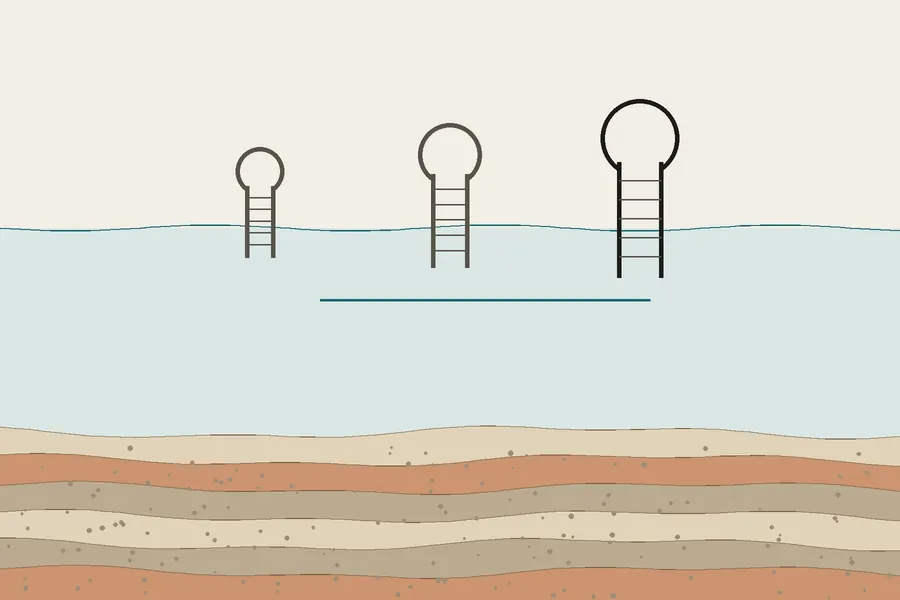
In a sentence
An RNA polymerase ribozyme, not a protein, ran Darwinian evolution of another ribozyme, but only when its copying was accurate enough.
In plain words
Evolution needs copies that are mostly right. Here an RNA enzyme repeatedly copied a smaller RNA enzyme, and the copies that still worked were kept each round. With an older, sloppier copier the population drifted into nonsense. With an improved copier, new and fitter variants evolved. The copier itself was not evolving, so this is not yet open-ended evolution.
Technical detail
A higher-fidelity polymerase replicates the hammerhead ribozyme by reciprocal synthesis of both strands, with selection for cleavage. Two parallel lineages: the low-fidelity one lost hammerhead function; the high-fidelity one evolved variants with improved fitness from mutations that raised replicability, at a small cost in activity. Deep sequencing tracked the succession.
What we take from it
Planned test
The nearest result to ladder level L4. Our 'functional RNAs are common' bench uses the same kind of deep-sequencing counts.
Source checked against its DOI. Read the original.