2024-08-05 · Paper · Communications Biology 7, 946
Critical dynamics in spontaneous EEG predict anesthetic-induced loss of consciousness and perturbational complexity
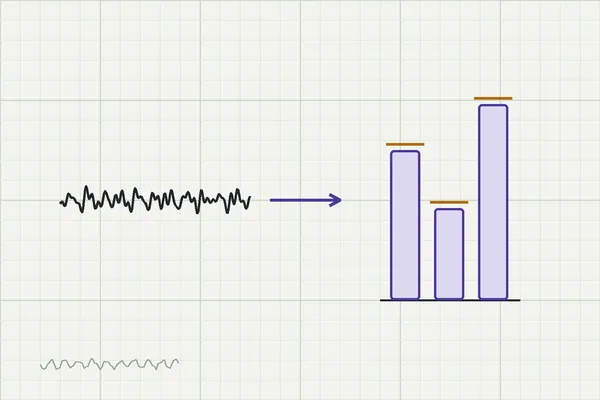
In 15 healthy adults under three anaesthetics, resting EEG predicted the stimulation-based consciousness index closely.
Volunteers were put under with propofol, xenon or ketamine; all stopped responding, but only the ketamine group reported vivid dreams afterwards. Measures of how close the resting brain sits to a 'critical' tipping point separated the dreaming group from the others, and predicted each person's score on the magnetic-pulse test.
15 healthy adults (propofol 5, xenon 5, ketamine 5), data from earlier studies. Avalanche criticality, chaoticity and related metrics; unconsciousness moved away from criticality and the edge of chaos. Ridge regression on 16 features predicted PCImax; leave-one-subject-out (15 folds) mean absolute error 0.065 (+/- 0.042); a 0.35 threshold separated conscious and unconscious states for true and predicted PCImax.
What we do with it
If true, the best-validated measure could be tested on many more open datasets. Caution: 15 subjects, 5 per drug, and the same cohort as Colombo 2019 and Sarasso 2015, so these are not independent replications. We test it out of sample. Planned
Read the original. Source checked against the original.